
_1763606929704.jpg)
_1763606934793.jpg)
_1763606942458.jpg)
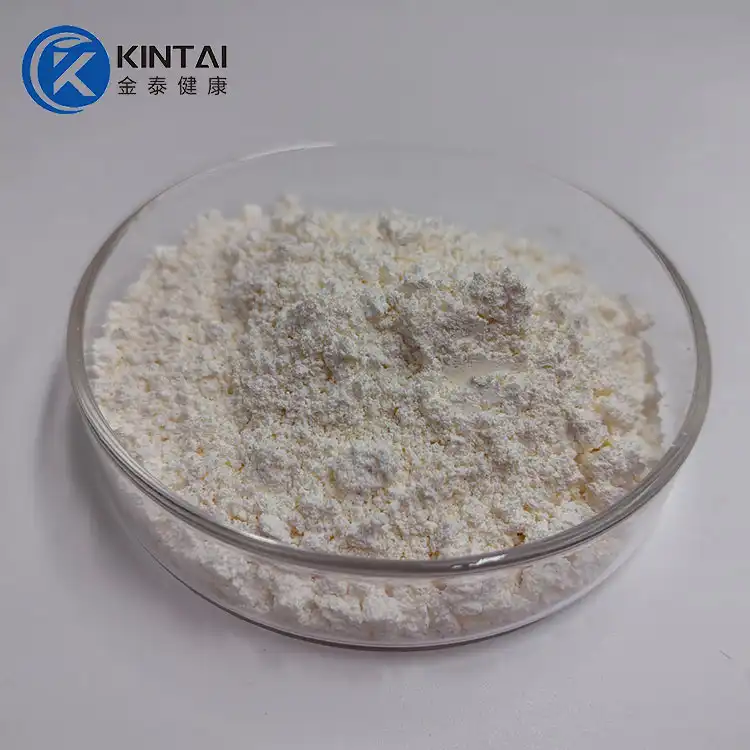
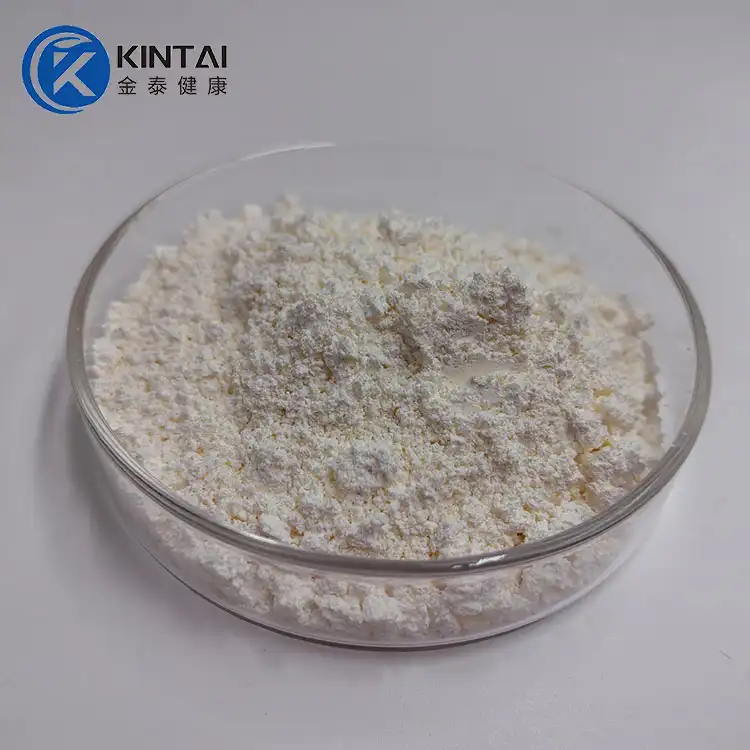
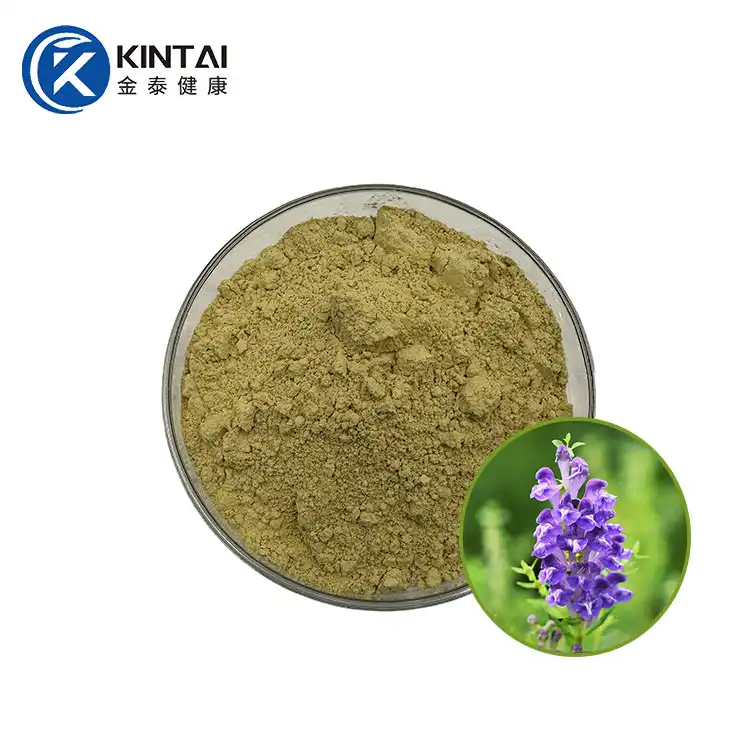
Sanguinarine Powder
Appearance : Organe red Powder
Sources : Macleaya cordata
CAS No : 2447-54-3
Test Method : HPLC
Shelf Life : 2 Years
MOQ : 1KG
Production Capacity : 2000KG/month
Sample :Free sample available
Applications : Pharmaceutical Field, Cosmetic raw materials
Delivery Time : Delivery within one day from the warehouse
Payment : T/T
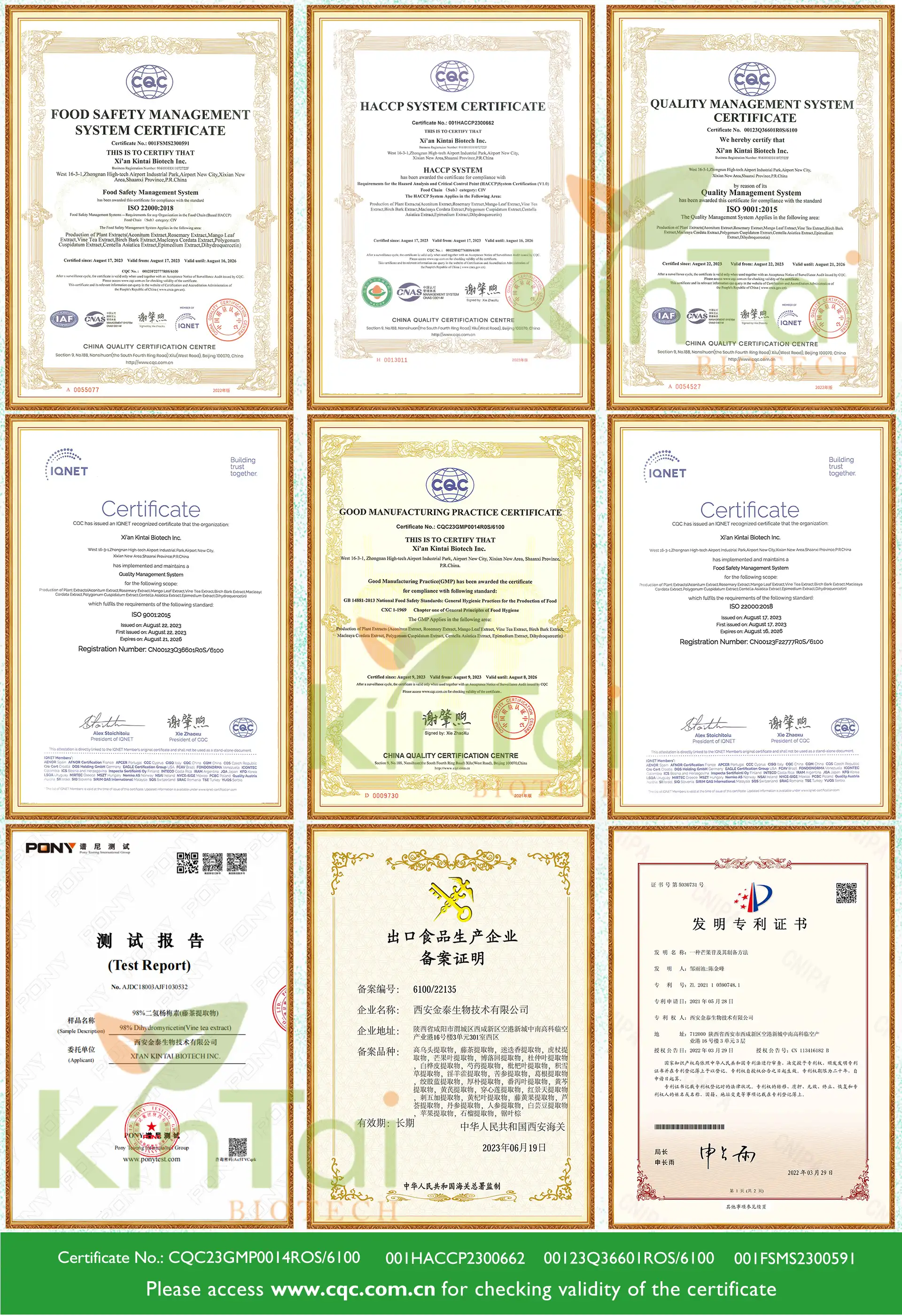
Certs : GMP, ISO9001, ISO22000, HACCP, KOSHER, HALAL
Advantages : Natural, Non-additive, Non-GMO, Treat by Heat Only,100,000 level clean production workshop
- Fast Delievery
- Quality Assurance
- 24/7 Customer Service
Product Introduction
Sanguinarine Powder manufacturer and supplier
Sanguinarine Powder is a natural botanical extract derived from plants of the Macleaya cordata genus, with CAS number 2447 - 54 - 3. It is a bioactive alkaloid compound that has garnered significant attention in various industries.
Healthkintai® stands as a leading producer of Macleaya Cordata Extract 60% total alkaloids( (Sanguinarine>40%,chelerythrine>15%). Through advanced extraction and purification technologies, we deliver pharmaceutical-grade quality, with the key bioactive compound Sanguinarine maintained in its core form, ensuring high bioavailability for diverse applications. Please feel free to contact us at health@kintaibio.com.
Healthkintai® Sanguinarine Powder Specifications
|
Specification |
Appearance |
Applications |
|
Sanguinarine 1.5% (HPLC) Total alkaloid 2% (UV) |
Light orange-red powder |
Veterinary drugs, feed |
|
Sanguinarine 6% (HPLC) Total alkaloid 10% (UV) |
Light orange-red powder |
Veterinary drugs, feed |
|
Sanguinarine 15% (HPLC) Total alkaloid 20% (UV) |
Nacarat orange powder |
Veterinary drugs, feed |
|
Sanguinarine 40% (HPLC) Total alkaloid 60% (UV) |
Nacarat orange powder |
Veterinary, feed, pesticide, medicine |
Sample available!Contact us now>>>
Sanguinarine Raw material selection and quality control
In selecting raw materials for our 40%Sanguinarine products, we implement a stringent and traceable raw material management system. We exclusively cultivate and carefully Macleaya cordata from designated GACP (Good Agricultural and Collection Practice) compliant sites as the sole plant for Sanguinarine. This ensures correct species identification and genetic purity. The harvesting is meticulously scheduled to coincide with the plant's peak physiological stages—typically the fruiting period and the peak of vegetative growth—when the biosynthesis of benzylisoquinoline alkaloids, particularly Sanguinarine and Chelerythrine, is empirically proven to be at its maximum concentration.
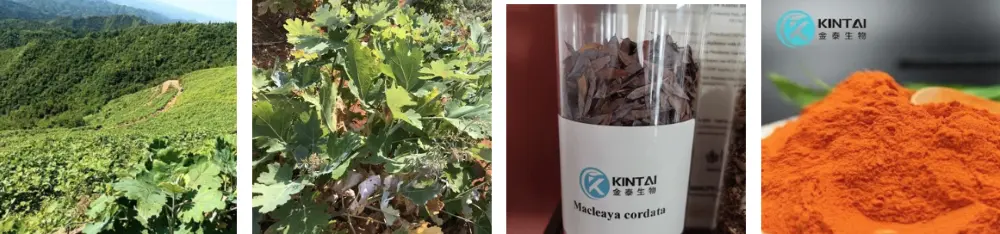
The core of quality control lies in the quantitative analysis of the main alkaloid components. Our Macleaya cordata extract is produced using modern chromatographic technology, specifically high-performance liquid chromatography, to accurately determine the content of key components such as sanguisorbin and chelidonine, ensuring batch-to-batch stability and standardization.
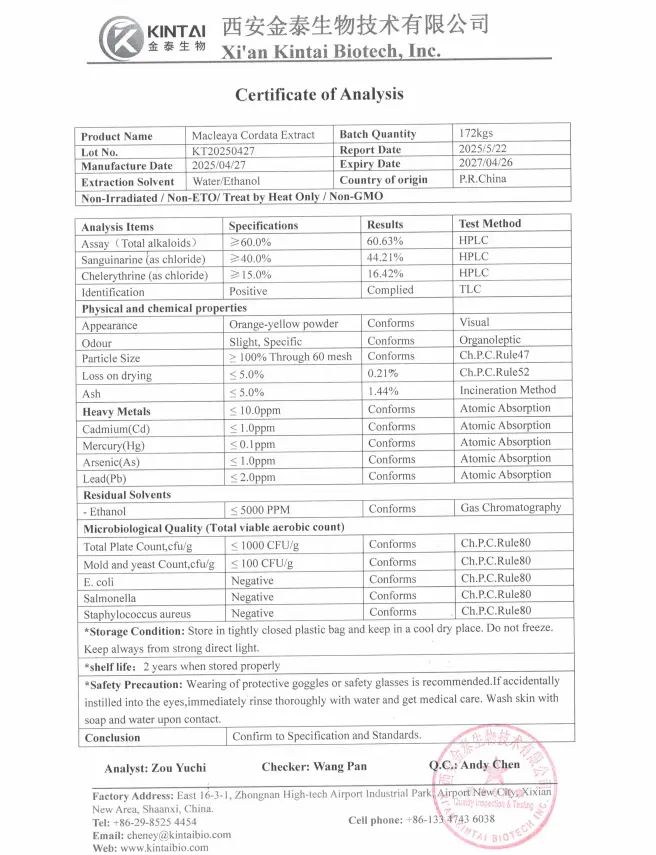
KINTAI Sanguinarine Powder COA
Physical and Chemical Properties of Macleaya cordata Extract
|
Property |
Description |
|
Source Plant |
Primarily derived from the whole plant, especially the roots and fruits, of Macleaya cordata (also known as Bocconia cordata). |
|
Main Active Components |
Benzylisoquinoline alkaloids, primarily Sanguinarine, Chelerythrine, Allocryptopine, Protopine, and Chelidonine. |
|
Appearance |
Fine powder, ranging in color from yellow, tan, brown, to orange-brown, depending on the concentration and manufacturing process. |
|
Odor |
Characteristic, slight herbal odor. |
|
Solubility |
The pure alkaloids (e.g., Sanguinarine) are sparingly soluble in water but soluble in organic solvents like methanol, ethanol, chloroform, and DMSO. Commercial extracts are often formulated for improved water solubility. |
|
pH Sensitivity |
The form and color of the main alkaloids can change with pH. For example, Sanguinarine is red at neutral pH but turns yellow in strong acids and forms a colorless pseudobase in alkaline conditions. |
|
Melting Point |
Varies for each alkaloid. For instance, Sanguinarine melts with decomposition at around 242-245°C. The extract itself does not have a sharp melting point. |
|
Analytical Methods |
Typically identified and quantified by HPLC (High-Performance Liquid Chromatography) and TLC (Thin-Layer Chromatography) against reference standards for the main alkaloids. |
|
Bioactivity |
Exhibits broad-spectrum antimicrobial (antibacterial, antifungal), anti-inflammatory, and antipruritic (anti-itching) properties. It is a natural growth promoter in animal feed. |
|
Safety / Toxicity |
The alkaloids can be toxic at high doses. Sanguinarine, for example, is known to inhibit Na+/K+-ATPase activity. Proper dosage is critical for its use in feed additives. |
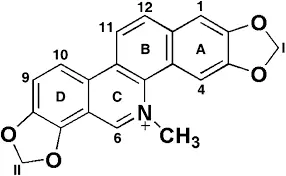
Sanguinarine mechanism of action
Sanguinarine is a benzophenanthridine alkaloid with a complex mechanism of action and multi-target properties. Its core function lies in its ability to broadly interfere with key intracellular biological processes.
It interferes with the cell cycle and DNA function. Sanguinarine can embed itself in the DNA double helix, forming a Sanguinarine-DNA complex. This not only directly inhibits DNA replication and transcription but also induces DNA damage, leading to cell cycle arrest, especially in the G2/M phase, thereby inhibiting cell proliferation. Inducing programmed cell death is one of its most significant characteristics. Sanguisorbin can induce apoptosis through multiple pathways. In the mitochondrial pathway, it causes mitochondrial membrane potential collapse, releasing cytochrome C, which in turn activates the caspase cascade.
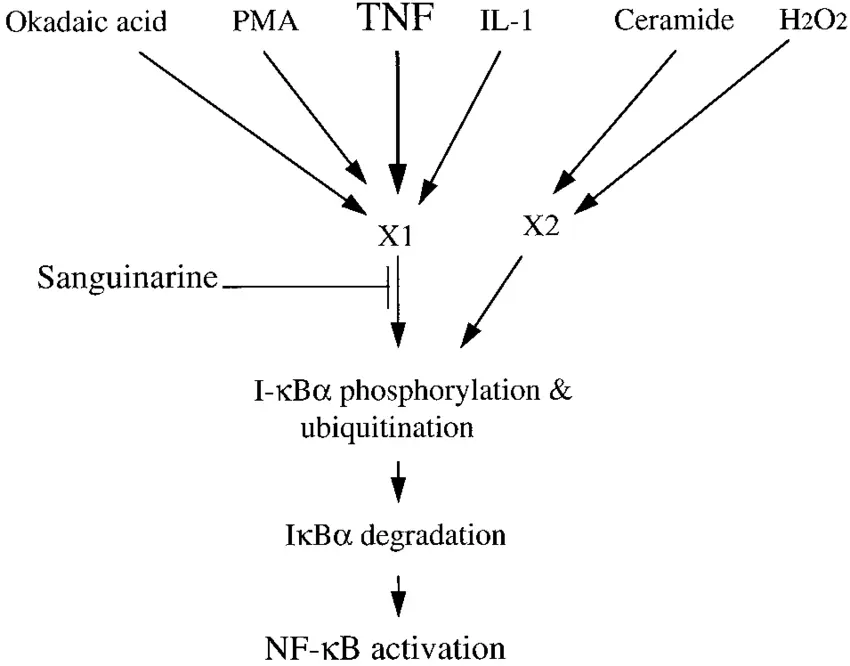
Sanguinarine exerts its powerful antibacterial, anti-inflammatory, and anti-proliferative effects through multiple molecular pathways, including direct action on DNA, induction of oxidative stress and apoptosis, and inhibition of key enzyme activity.
Sanguinarine Uses
1. Animal Feed Additives
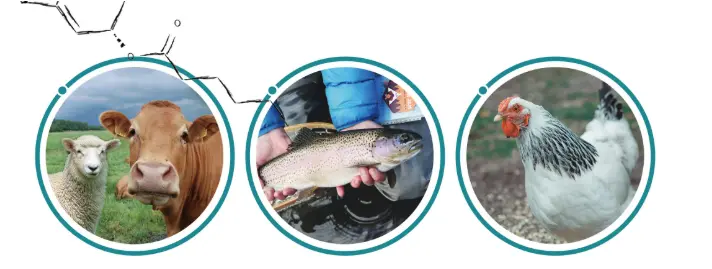
This is currently the most important and mature application area for sanguinarine. As a natural plant extract, it is widely used as a green feed additive in livestock production.
With its powerful broad-spectrum antibacterial (especially effective against Gram-negative bacteria) and anti-inflammatory properties, sanguinarine can effectively prevent and treat intestinal diseases in livestock and poultry, improve intestinal health, and thus largely replace growth-promoting antibiotics. It can improve feed conversion rate, promote nutrient digestion and absorption, thereby improving the daily weight gain and overall production performance of animals such as pigs and chickens. By regulating the balance of intestinal flora and inhibiting inflammatory responses, sanguinarine helps enhance the non-specific immunity of animals and reduce the incidence of disease.
2. Oral Care Products
Sanguinarine is one of the earliest and most widely used applications, mainly utilizing its antibacterial and anti-inflammatory properties. It can effectively combat oral pathogens (such as streptococci) that cause dental plaque and gingivitis. By controlling plaque and reducing inflammation, it is added to products such as Sanguinarine toothpaste and Sanguinarine mouthwash for the prevention and treatment of gingivitis and periodontal disease.

3. Agriculture and Horticulture
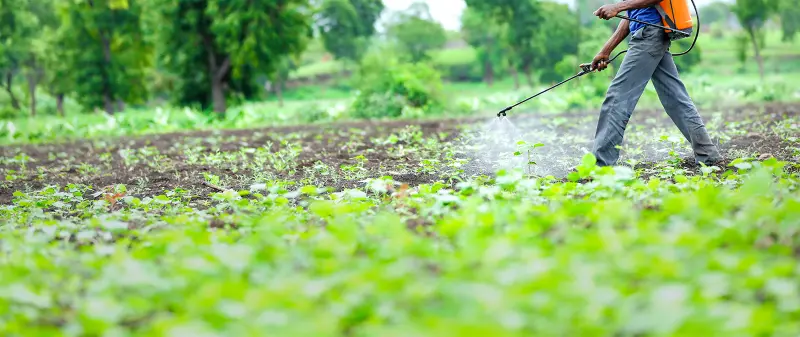
In agriculture, sanguinarine is primarily developed as a plant-derived pesticide. As a fungicide, it exhibits significant inhibitory activity against various agricultural pathogenic fungi (such as wheat scab and cucumber gray mold) and bacteria, and is unlikely to induce resistance. As an insecticide, it demonstrates contact and stomach poison activities against some agricultural pests (such as aphids and mites), making it an environmentally friendly candidate ingredient for green pesticides.
Interested? Contact us to get a free sample>>>
Sanguinarine toxin side effects
Sanguisorbine requires strict dosage control during application; otherwise, it may cause a series of toxic side effects. Its core toxic mechanism lies in its ability to effectively inhibit Na+/K+-ATPase (sodium-potassium pump) on the cell membrane, thereby disrupting the normal ion gradient inside and outside the cell, leading to severe cellular dysfunction. Specifically, local contact can irritate the skin and mucous membranes; oral overdose can cause severe gastrointestinal reactions such as nausea, vomiting, abdominal pain, and diarrhea. If the toxin is absorbed into the systemic circulation, it can produce more severe systemic poisoning symptoms, including respiratory distress, arrhythmia, hypotension, and even life-threatening conditions due to respiratory paralysis. Therefore, although it has applications in animal feed and oral care, its potential toxicity must be given high priority and strictly controlled.
Why Choose KINTAI Sanguinarine Powder?
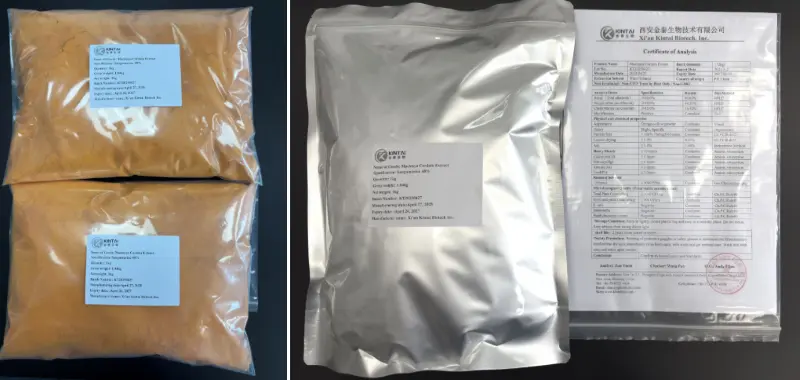
Our products hold international quality system certifications such as GMP, ISO9001:2015, ISO22000:2018, HACCP, KOSHER, and HALAL. Every batch of products you receive meets international standards for heavy metals, microbial residues, and the content of key active ingredients (such as sanguisorbin), ensuring stable and reliable quality. Furthermore, we offer professional customization services. Whether it's adjusting the total alkaloid content ratio to suit your needs (e.g., a specific concentration of sanguisorbin to chelidonine), or adapting different dosage forms and carriers, we can provide you with a customized solution.
If you require Sanguisorbine powder, please feel free to contact us at health@kintaibio.com.
Our Certifications
Send Inquiry

_1757043784560.jpg)